
If you’ve been looking at mushroom supplements, you’ve probably noticed that everyone recommends them for everything. Heart health. Immunity. Brain function. Energy. The claims pile up fast, and it becomes hard to know what’s backed by real research and what’s just good marketing.
We’ve been using medicinal mushrooms with our patients for over 30 years. We know which ones have solid clinical evidence, where the research is still catching up, and what to look for in a quality product. That’s what this article is about.
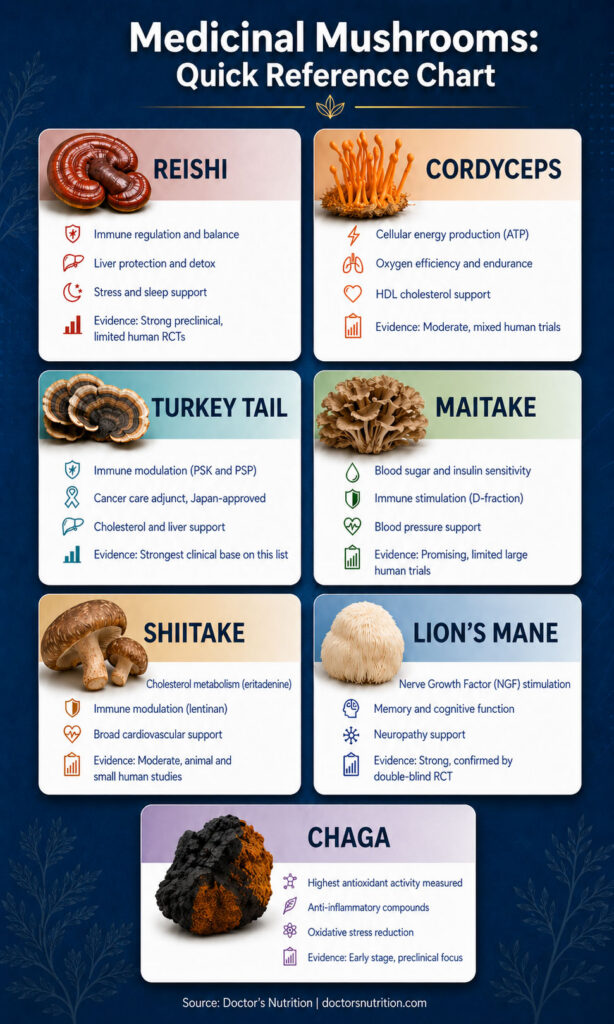
There are hundreds of mushroom species. Here are the seven with the most meaningful evidence behind them, what they actually do, and which patients we typically reach for them with.
Table of Contents
How Medicinal Mushrooms Work in Your Body
Most of the immune benefits from medicinal mushrooms come from compounds called beta-glucans. These are found in the cell walls of mushrooms. When you take them in, they bind to receptors on your immune cells, specifically macrophages, natural killer cells, and dendritic cells, and activate them.¹
What makes this interesting is that beta-glucans don’t just push your immune system into high gear. They help regulate it. An immune system that’s underactive leaves you open to infections. One that’s overactive drives autoimmune conditions and chronic inflammation. Mushrooms appear to help find that middle ground, which is why they show up in research on both immune deficiency and autoimmune disease.²
We see this in practice constantly. Patients with autoimmune conditions, recurrent infections, and chronic fatigue don’t need more immune stimulation. They need a better-calibrated immune response. That distinction matters when you’re choosing a protocol.
Why Most Mushroom Supplements Fall Short
Mushrooms absorb compounds from whatever they’re grown in. That’s useful for therapeutic purposes. It’s also why a lot of commercial mushroom products are less effective than they should be.
Mushrooms grown in contaminated soil can accumulate heavy metals, including lead and cadmium. This isn’t rare. Third-party testing for heavy metals is something you should confirm before taking any mushroom supplement long-term.
The other issue is fruiting body versus mycelium. The fruiting body is the visible part of the mushroom, and it’s where most of the active compounds are concentrated. Many cheaper supplements use only the mycelium, which is often grown on grain and contains more starch than active polysaccharides. Always look for standardized polysaccharide content and confirmation of what part of the mushroom was used. For lion’s mane specifically, both the fruiting body and the mycelium contain distinct active compounds, so a product that uses both is preferable.
Medicinal Mushrooms List: 7 Species Worth Knowing
Reishi (Ganoderma lucidum)
Best for:
- Chronic stress with immune impact: frequent colds, slow recovery, or infections that linger longer than they should
- Autoimmune conditions where immune regulation matters more than stimulation
- Liver support, particularly in patients managing metabolic conditions alongside immune concerns
- Sleep disruption tied to elevated cortisol or an overactive stress response
Reishi is one of the most studied mushrooms, and also one of the most over-marketed. You’ll see it promoted heavily for blood pressure and cholesterol. The human trial evidence doesn’t support that. A Cochrane systematic review, the highest standard for evaluating clinical research, looked at randomized controlled trials on reishi and found no statistically significant improvements in blood pressure or cholesterol.´ We tell patients this upfront because the last thing you need is a supplement protocol built on a claim the research doesn’t back.
Where reishi has stronger mechanistic and preclinical support is immune regulation and liver support. Its active compounds include triterpenes called ganoderic acids, which show anti-inflammatory and liver-protective effects in laboratory and animal research.³ The anti-inflammatory activity is well-characterized enough that we use it with patients dealing with chronic systemic inflammation, including autoimmune conditions where the goal is calming the immune response, not amplifying it.
We also reach for reishi in patients who are chronically run down rather than acutely sick. The pattern is someone who catches every cold, takes weeks to recover, and feels like their immune system is working against them rather than for them. That stress-immune connection is where reishi fits best.
Cordyceps (Cordyceps sinensis / Cordyceps militaris)
Best for:
- Persistent fatigue that doesn’t improve with adequate sleep
- Age-related decline in exercise tolerance, or getting winded more easily than you used to
- Respiratory function and oxygen utilization, particularly in active older adults
- Adrenal recovery patterns where energy is consistently low in the morning and fluctuates throughout the day
Research on cordyceps compounds points to activity at the cellular level: promoting ATP production, the molecule cells use for energy, and improving how efficiently cells use oxygen during physical activity. One trial using a cordyceps militaris-containing mushroom blend showed improvements in high-intensity exercise tolerance measures, though large isolated cordyceps trials are still limited.⁵
A separate double-blind, placebo-controlled trial in healthy older adults used Cordyceps sinensis (Cs-4) specifically, and found that 12 weeks of supplementation increased metabolic threshold by 10.5% and ventilatory threshold by 8.5%. Peak oxygen consumption didn’t change significantly, but those threshold improvements are meaningful for patients who feel winded or fatigued more easily than they used to.⁶
In our clinic, cordyceps is one of the more consistent performers for energy and exercise tolerance in patients over 45. The patients who respond best are those whose fatigue isn’t driven by thyroid or iron issues, which is why we always run labs first before attributing fatigue to adrenal function or energy metabolism. Treating the wrong system doesn’t help anyone.
Turkey Tail (Trametes versicolor)
Best for:
- General immune regulation, especially when immunity feels sluggish, inconsistent, or like it never fully reset after an illness
- Adjunct support during or after cancer treatment, in consultation with your oncologist
- Elevated cholesterol alongside immune concerns
- Chronic viral infections or post-viral fatigue where the immune system hasn’t fully cleared
Quick clarification before we go further: turkey tail and coriolus mushroom are the same species, Trametes versicolor. You may have seen them listed as separate mushrooms in other articles. They are not.
Turkey tail has two well-researched immune compounds, polysaccharide-K (PSK) and polysaccharopeptide (PSP). PSK is not a fringe supplement. It has regulatory approval in Japan as an adjunct therapy in cancer treatment, where it’s been studied alongside chemotherapy and radiation in multiple controlled trials. A Phase 1 clinical trial found turkey tail safe and produced measurable immune-modulating effects in breast cancer patients receiving standard treatment.⁷ A separate systematic review and meta-analysis found an association with improved survival outcomes in cancer patients when Yun Zhi/Coriolus was used alongside conventional cancer treatment.⁸ This is human clinical evidence, though it should be framed as adjunctive cancer-care research, not a standalone cancer treatment.
For patients not going through cancer treatment, turkey tail remains one of the best-evidenced mushrooms for general immune support. The PSK and PSP compounds work by activating T-cells and natural killer cells simultaneously, without driving the inflammatory response that causes problems in autoimmune conditions. That balance is harder to achieve than it sounds, and it’s a big part of why turkey tail ends up in so many of our immune protocols.
Maitake (Grifola frondosa)
Best for:
- Blood sugar irregularities, especially prediabetes patterns or fasting glucose that keeps creeping upward
- Patients with overlapping immune and metabolic concerns, where one mushroom can address both
- Mild blood pressure support alongside other metabolic interventions
- Insulin sensitivity issues, particularly in patients who are also working on diet and weight
Maitake’s primary active compound is the D-fraction, a beta-glucan that has shown anti-tumor activity and immune-stimulating effects in preclinical research.⁹ But what makes maitake stand out from the other mushrooms on this list is its metabolic data. The SX fraction of maitake has shown favorable effects on blood glucose and insulin sensitivity in animal models, while human evidence remains preliminary and limited.¹⁰
The mechanism is worth understanding: maitake SX-fraction may improve insulin sensitivity based on animal data, meaning cells potentially respond better to existing insulin. It’s a different target than most blood sugar supplements, which typically work by slowing carbohydrate absorption or stimulating insulin production directly. Whether this translates consistently in humans still needs stronger confirmation.
We reach for maitake most often in patients dealing with blood sugar concerns alongside immune health, a combination we see regularly. The evidence base isn’t as robust as turkey tail’s, and large human trials are still limited. But the signal across available studies is consistent enough that maitake earns a regular place in our metabolic-immune protocols, especially when labs show fasting glucose or insulin trending in the wrong direction.
Shiitake (Lentinula edodes)
Best for:
- Elevated LDL or total cholesterol, particularly in patients who prefer a food-first approach
- General immune maintenance in otherwise healthy patients who want a low-risk, accessible option
- Cardiovascular risk profiles that include both cholesterol concerns and inflammation markers
- Patients managing their diet actively, where the food form provides a meaningful starting point
Shiitake contains two compounds worth knowing about. Lentinan is a beta-glucan with documented immune-modulating effects, similar in mechanism to what we see in turkey tail and maitake. Eritadenine is different. It supports the body’s own cholesterol metabolism by interfering with the enzyme responsible for incorporating cholesterol into phospholipids. Animal studies and limited older human data suggest possible modest cholesterol benefits from regular shiitake consumption.¹¹
Shiitake is one of the better options to consider in food form because it contains compounds such as lentinan and eritadenine, though cholesterol effects from diet-level intake are likely modest. Most mushrooms require concentrated extracts to deliver therapeutic doses. Shiitake eaten regularly as a culinary mushroom provides these compounds in smaller amounts, which counts as a starting point, not a clinical intervention.
In clinical practice, we use shiitake most consistently with patients whose cardiovascular and immune concerns overlap. It’s not going to move a severely elevated LDL on its own. But as part of a broader protocol that includes dietary changes and appropriate supplementation, it contributes meaningfully and has a safety profile that’s essentially identical to food.
Lion’s Mane (Hericium erinaceus)
Best for:
- Brain fog or memory concerns in adults over 50
- Age-related cognitive decline, especially early-stage concerns before major impairment sets in
- Peripheral neuropathy, where nerve growth factor support may contribute to symptom management
- Post-viral cognitive symptoms, including the cognitive difficulties some patients experience after COVID-19
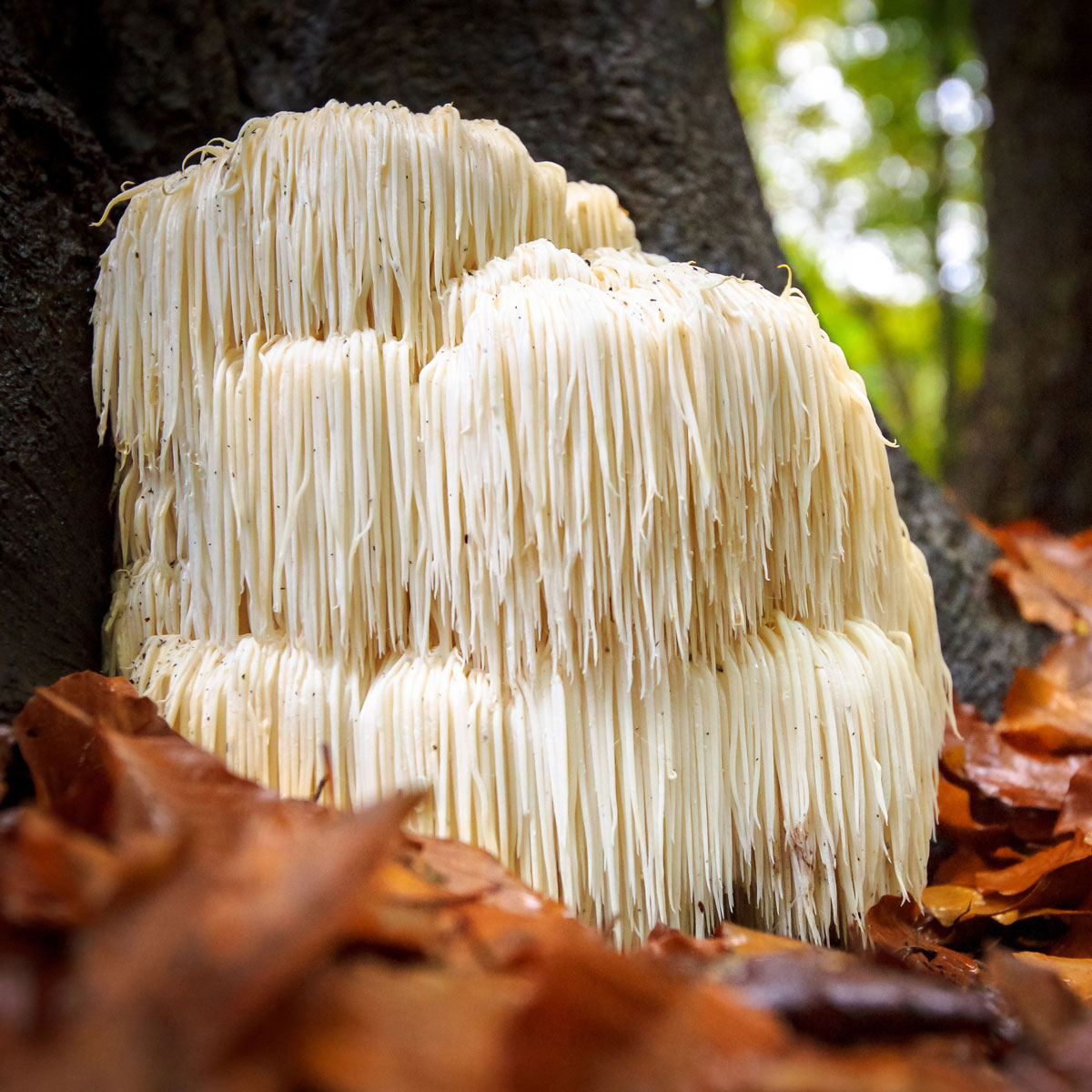
Lion’s mane is different from everything else on this list. Its primary evidence is neurological, not cardiovascular or immune. Compounds in lion’s mane have been shown in preclinical research to stimulate Nerve Growth Factor (NGF)-related activity. NGF is a protein the brain needs to maintain, repair, and grow neurons.¹² NGF production declines with age, which is part of why cognitive function tends to drift in the decades past 50. Giving the brain a way to support its own repair mechanisms is a fundamentally different strategy than most cognitive supplements on the market.
A double-blind, placebo-controlled clinical trial followed adults aged 50 to 80 with mild cognitive impairment for 16 weeks. The group taking lion’s mane showed significant improvements in cognitive function scores. When they stopped taking it, the scores declined. That pattern supports a real biological effect, though the trial was small and should be interpreted as promising rather than definitive.¹³
The compounds responsible are hericenones, found in the fruiting body, and erinacines, found in the mycelium. You need both to get the full picture. A product that sources only one of the two is leaving active compounds on the table. This is one of the few cases where a dual-source supplement is the right call rather than a marketing gimmick.
AT DOCTOR’S NUTRITION
Lion’s Mane Organic (60 Vegan Capsules)
We use Lion’s Mane Organic because it sources from both the fruiting body and the mycelium of Hericium erinaceus, standardized to 40% polysaccharides, 400 mg per serving. It’s USDA certified organic, U.S. grown, vegan, gluten-free, and non-GMO. For patients dealing with brain fog, memory decline, or peripheral neuropathy, this is one of our most consistently recommended protocols.
Chaga (Inonotus obliquus)
Best for:
- Elevated oxidative stress markers on labs, which we see regularly in cardiovascular disease, metabolic conditions, and chronic fatigue
- Chronic inflammation patterns, both cardiovascular and metabolic
- Antioxidant support during intensive protocols where the body is under higher oxidative load
- Patients with significant environmental exposure or lifestyle factors that increase oxidative stress
Chaga grows on birch trees and is rich in antioxidant compounds, including polyphenols, melanins, and triterpenes. It also contains betulinic acid, derived from birch bark, which has been studied for anti-tumor properties in preclinical research.¹⁴ The antioxidant mechanism matters clinically because oxidative stress isn’t just a wellness buzzword. Elevated oxidative markers in blood work correlate with accelerated cardiovascular disease, metabolic dysfunction, and chronic fatigue.
For patients with elevated oxidative stress markers on labs, chaga can be a meaningful addition to a broader protocol. We’re transparent with patients about where the evidence sits: the antioxidant and preclinical data are promising. Large controlled human trials are still limited. We use chaga most often as a supporting compound alongside other mushrooms, not as a standalone intervention for a specific condition.
The practical use case we see most often is patients who are managing multiple chronic conditions simultaneously and whose labs show high levels of oxidative burden across the board. Chaga gives us a way to address that layer of the picture without adding pharmaceutical complexity.
What Labs Tell You That Supplements Can’t
Knowing which mushrooms have the best research gets you to the right starting point. Knowing which ones apply to your specific situation requires your own data. We run comprehensive labs before recommending any protocol: immune markers, cardiovascular risk factors, inflammatory markers, adrenal and thyroid function. Those results tell us where the actual problem is.
A mushroom protocol built around your lab picture works differently than one chosen from general research. If you’re dealing with fatigue, that could be thyroid, iron, cortisol, or mitochondrial function. Reaching for cordyceps before ruling those out means you might be treating the wrong system entirely. If your concern is cognitive, knowing whether you have inflammation, blood sugar irregularities, or thyroid dysfunction changes which compounds belong in your protocol.
This is why we rarely recommend a single mushroom in isolation, and why we always start with labs. The article gives you the research. The labs give you the map.
Find Out What Your Labs Actually Show
If you’ve been dealing with fatigue, recurring immune issues, cardiovascular risk factors, or cognitive decline and haven’t gotten clear answers, a free consultation is a straightforward next step. We look at your full picture, not just one marker, and tell you what your labs actually show and what a protocol built around your specific numbers would look like.
Consultations at Doctor’s Nutrition are always free. No obligation. Just answers.
Schedule your free consultation here.
Frequently Asked Questions
What is the best medicinal mushroom for immune support?
Turkey tail has the most clinical evidence, particularly its PSK compound, which has been studied in cancer patients alongside chemotherapy in multiple controlled trials. Reishi and maitake also show meaningful immune activity. For general immune support, a multi-mushroom protocol tends to outperform any single species, which is why we rarely recommend one mushroom in isolation.
Which mushrooms are best for heart health and blood pressure?
This is where the marketing gets ahead of the evidence. Reishi is widely promoted for blood pressure and cholesterol, but the Cochrane review of randomized controlled trials found no significant effect. Cordyceps has better cardiovascular evidence through energy metabolism and, in some studies, HDL cholesterol. Shiitake’s eritadenine supports the body’s own cholesterol processing. If heart health is the goal, we recommend running a full cardiovascular panel first so the protocol is built around your actual numbers.
What is the difference between fruiting body and mycelium in mushroom supplements?
The fruiting body is the visible mushroom and contains the highest concentrations of bioactive compounds. Mycelium-only supplements, especially those grown on grain, often contain more starch and fewer active polysaccharides. For lion’s mane, both parts are important because hericenones come from the fruiting body and erinacines come from the mycelium. A dual-sourced product captures both.
How long does it take for medicinal mushrooms to work?
Most clinical trials that showed measurable results ran 8 to 16 weeks. Some patients notice changes in energy or cognitive clarity within 2 to 4 weeks. For objective markers, such as lab values or cognitive scores, 90 days is a reasonable evaluation window before adjusting a protocol. We rerun labs at that point to confirm what’s changing.
Are medicinal mushroom supplements safe for long-term use?
The species covered here have well-established safety profiles at standard doses in healthy adults. The main safety concern is heavy metal contamination from low-quality sourcing, which is why third-party testing matters when choosing a product. Patients on immunosuppressant medications should speak with their doctor before starting any mushroom supplement, since immune modulation could interact with those treatments.
References
1. Batbayar S, Lee DH, Kim HW. “Immunomodulation of Fungal β-Glucan in Host Defense Signaling by Dectin-1.” Biomolecules and Therapeutics 20, no. 5 (2012): 433–445. DOI: 10.4062/biomolther.2012.20.5.433. PMID: 24009833.
2. Vetvicka V, Vetvickova J. “Immune-enhancing effects of Maitake (Grifola frondosa) and Shiitake (Lentinula edodes) extracts.” Annals of Translational Medicine 2, no. 2 (2014): 14. DOI: 10.3978/j.issn.2305-5839.2014.01.05.
3. Wachtel-Galor S, Yuen J, Buswell JA, et al. “Ganoderma lucidum (Lingzhi or Reishi): A Medicinal Mushroom.” In Herbal Medicine: Biomolecular and Clinical Aspects. 2nd ed. Boca Raton: CRC Press/Taylor & Francis, 2011. PMID: 22593926.
4. Klupp NL, Chang D, Hawke F, et al. “Ganoderma lucidum mushroom for the treatment of cardiovascular risk factors.” Cochrane Database of Systematic Reviews, no. 2 (2015). DOI: 10.1002/14651858.CD007259.pub2.
5. Hirsch KR, Smith-Ryan AE, Roelofs EJ, et al. “Cordyceps militaris improves tolerance to high-intensity exercise after acute and chronic supplementation.” Journal of Dietary Supplements 14, no. 1 (2017): 42–53. DOI: 10.1080/19390211.2016.1203386. PMID: 27377037. [Note: Study used a cordyceps militaris-containing mushroom blend.]
6. Chen S, Li Z, Krochmal R, et al. “Effect of Cs-4 (Cordyceps sinensis) on exercise performance in healthy older subjects: a double-blind, placebo-controlled trial.” Journal of Alternative and Complementary Medicine 16, no. 5 (2010): 585–590. DOI: 10.1089/acm.2009.0226. PMID: 20804368.
7. Torkelson CJ, Sweet E, Martzen MR, et al. “Phase 1 Clinical Trial of Trametes versicolor in Women with Breast Cancer.” ISRN Oncology (2012). DOI: 10.5402/2012/251632. PMID: 22701185.
8. Eliza WLY, Fai CK, Chung LP. “Efficacy of Yun Zhi (Coriolus versicolor) on Survival in Cancer Patients: Systematic Review and Meta-Analysis.” Recent Patents on Inflammation and Allergy Drug Discovery 6, no. 1 (2012): 78–87. DOI: 10.2174/187221312798889310. PMID: 22185453.
9. Kodama N, Komuta K, Nanba H. “Can Maitake MD-Fraction Aid Cancer Patients?” Alternative Medicine Review 7, no. 3 (2002): 236–239. PMID: 12126464.
10. Preuss HG, Echard B, Bagchi D, Perricone NV, Zhuang C. “Enhanced insulin-hypoglycemic activity in rats consuming a specific glycoprotein extracted from maitake mushroom.” Molecular and Cellular Biochemistry 306, no. 1–2 (2007): 105–113. DOI: 10.1007/s11010-007-9559-6. PMID: 17671829.
11. Suzuki S, Ohshima S. “Influence of Shiitake (Lentinus edodes) on Human Serum Cholesterol.” Mushroom Science 9 (1974): 463–467.
12. Kawagishi H, Zhuang C. “Compounds for dementia from Hericium erinaceum.” Drugs of the Future 33, no. 2 (2008): 149–155. DOI: 10.1358/dof.2008.033.02.1158290.
13. Mori K, Inatomi S, Ouchi K, et al. “Improving effects of the mushroom Yamabushitake (Hericium erinaceus) on mild cognitive impairment: a double-blind placebo-controlled clinical trial.” Phytotherapy Research 23, no. 3 (2009): 367–372. DOI: 10.1002/ptr.2634. PMID: 18844328.
14. Géry A, Dubreule C, André V, et al. “Chaga (Inonotus obliquus), a Future Potential Medicinal Fungus in Oncology?” Integrative Cancer Therapies 17, no. 3 (2018): 832–843. DOI: 10.1177/1534735418757912. PMID: 29444576.
