
At Doctor’s Nutrition, we hear a version of the same story regularly. A patient comes in with chronic bloating, fatigue that has been going on for months, and brain fog they cannot explain. They tried a probiotic from the pharmacy. Maybe a digestive enzyme blend a friend recommended. Neither made much of a difference, and now they are not sure which direction to go.
The problem usually is not the supplement. It is that they started supplementing before anyone identified the actual root cause.
If you are standing in that same spot, wondering whether digestive enzymes or probiotics are the answer, this is for you. We will walk through exactly how each one works, what current research says about their benefits, and why testing first is almost always the smartest path.
What Is the Difference Between Digestive Enzymes and Probiotics?
Digestive enzymes and probiotics both support gut health, but they work in completely different parts of your digestive system and in completely different ways.
Digestive enzymes are proteins your body produces in the mouth, stomach, pancreas, and small intestine. Their job is to break complex food molecules down into smaller pieces your body can actually absorb: amino acids from proteins, fatty acids from fats, and simple sugars from carbohydrates. Without sufficient enzymes, food passes through partially undigested, and your cells never receive the nutrients they need, no matter how healthy your diet is.
Probiotics are living microorganisms, primarily bacteria and yeast, that reside mostly in your large intestine. They do not break down food the way enzymes do. Instead, they maintain the ecosystem of your gut microbiome, competing with harmful bacteria, reinforcing your intestinal lining, producing certain vitamins, and communicating directly with your immune system. Think of enzymes as the processing equipment and probiotics as the environment that equipment operates in.
Both are essential. They are not interchangeable.
Are Digestive Enzymes the Same as Probiotics?
No, and the confusion between them is worth clearing up because it leads a lot of people to buy the wrong product for their symptoms.
Digestive enzymes are non-living proteins. They do their work in the upper gastrointestinal tract, primarily in the stomach and small intestine, where food is actively being broken down. They do not survive into the large intestine and they do not colonize anything. They act, and then they are gone.
Probiotics are living organisms. They pass through the upper GI tract and take up residence primarily in the large intestine, where they influence microbial balance over days and weeks. Their benefits accumulate over time rather than acting immediately at a single meal.
One acts as the processing machinery. The other shapes the long-term environment. Mixing them up means you may be addressing the wrong system entirely.
The Main Types of Digestive Enzymes and What Each One Does
Your body uses several distinct enzymes, each designed for a specific job. Understanding which enzyme handles which macronutrient helps explain why a broad-spectrum formula is usually more effective than a single-enzyme product.
Amylase, found in both saliva and pancreatic juice, begins breaking down complex carbohydrates the moment you start chewing. By the time food reaches your small intestine, amylase has already started converting starches into simpler sugars your body can absorb.
Lipase, produced primarily by the pancreas, handles dietary fat. Without adequate lipase, fats pass through undigested and your body loses access to fat-soluble vitamins A, D, E, and K, four nutrients that play central roles in immunity, bone density, and hormonal function.
Protease breaks proteins into amino acids, the building blocks your body uses to repair tissue, produce hormones, and maintain immune function. Protease is not just one enzyme. It is a family of enzymes: bromelain, pepsin, trypsin, and papain each target proteins at different points in the digestive process, which is why thorough protein digestion requires multiple proteolytic enzymes working in sequence.
Lactase is more specialized. It targets lactose, the sugar in dairy, and is produced in the lining of the small intestine. Many adults produce insufficient lactase, which is why dairy causes so many digestive symptoms even in people who tolerated it fine as children.
Cellulase rounds out the picture by helping digest fiber, something the human body cannot fully accomplish on its own.

All-Zyme from Doctor’s Nutrition
All-Zyme is a broad-spectrum formula containing seven digestive enzymes alongside ox bile, pancreas substance, and betaine hydrochloride. It places particular emphasis on proteolytic enzymes, including bromelain, pepsin, trypsin, and papain, so it addresses protein breakdown comprehensively rather than relying on a single enzyme.
The ox bile and pancreas substance are enteric coated, meaning they bypass stomach acid and release only when they reach the small intestine, exactly where fat digestion takes place. Betaine hydrochloride provides the hydrochloric acid support that enzymes need to function properly throughout the GI tract.*
Foods That Naturally Support Enzyme Production
Before reaching for a supplement, it is worth knowing that certain foods come with their own naturally occurring enzymes. Pineapple is rich in bromelain, a protease that helps break down protein. Papaya provides papain, another protein-digesting enzyme that has been used for centuries in food preparation precisely because it breaks down tough proteins so efficiently. Mango, kiwi, and avocado also contain naturally occurring enzymes that contribute to breaking down different macronutrients.
Fermented foods like yogurt, kefir, sauerkraut, and kimchi contribute both probiotic bacteria and naturally occurring enzymes that give the digestive process an early boost. Sprouted grains are also worth noting because the soaking or sprouting process triggers enzyme release within the grain itself, making the nutrients inside significantly easier to absorb.
These foods support a healthy baseline. They are not a replacement for therapeutic supplementation when there is a genuine deficiency, but they belong in any real gut health strategy.
Prescription vs. Over-the-Counter Digestive Enzymes
Prescription digestive enzymes, known as Pancreatic Enzyme Replacement Therapy, are reserved for people with diagnosed conditions that severely compromise pancreatic function, including chronic pancreatitis, cystic fibrosis, and pancreatic cancer. These are high-dose formulations regulated as medications and require careful clinical monitoring. They are not the same category as the supplements you find at a health store.
Over-the-counter enzyme blends are appropriate for functional digestive issues: post-meal bloating, discomfort after heavy or high-fat meals, lactose sensitivity, and the general digestive sluggishness that comes with age or chronic stress. The quality of OTC products varies considerably. Enteric coating matters because enzymes that dissolve in the stomach before reaching the small intestine cannot do their job. The potency and variety of enzymes in the formula matter as well.
If over-the-counter options have not moved the needle for you, that is usually a signal that something more specific is going on, and a functional lab workup is the next logical step rather than trying yet another product.

What Digestive Enzyme Insufficiency Looks Like
The symptoms of enzyme insufficiency are easy to confuse with other digestive problems, which is part of why they go unaddressed for so long. Standard bloodwork does not measure enzyme activity or capture functional malabsorption directly. A patient can have a completely normal-looking panel and still be failing to absorb the nutrients in their food.
The pattern we see regularly in our functional lab work looks something like this. Bloating or gas begins within an hour of eating, not later in the day. The feeling after a meal is heaviness rather than satisfaction, even after a modest portion. Stool is pale, greasy, or floats, which reflects fat passing through undigested. Fatigue does not improve with more sleep. Nutrient deficiencies show up on labs despite a reasonable diet.
Visible undigested food in the stool is one of the clearer signs. When enzyme production is severely compromised, food can pass through the digestive tract before it has been adequately processed.
Enzyme production declines naturally with age, which matters particularly for people in their forties and fifties. Chronic stress compounds the problem by redirecting physiological resources away from digestive function. Regular use of antacids reduces the acidic environment that enzymes require to work properly. A diet heavy in fried, baked, or grilled foods depletes naturally occurring food enzymes before they can contribute to digestion. Any one of these factors can reduce enzyme activity. When several are present at the same time, the cumulative effect on digestion is significant.
How and When to Take Digestive Enzymes
For maximum effectiveness, digestive enzymes should be taken immediately before a meal or at the very start of eating. Taking them on an empty stomach or long after food has already moved through the stomach defeats the purpose entirely. The enzymes need to be present in the digestive tract at the same time as the food they are meant to break down.
Many people notice a reduction in post-meal bloating within a few days of consistent use. Correcting the deeper nutrient deficiencies caused by long-term malabsorption takes longer, often several weeks to a few months, because you are not just addressing one meal but restoring what has been depleted over time.
This is why testing before supplementing saves time and money. If you know which part of digestion is breaking down, you can target your approach instead of guessing.
What Probiotics Actually Do for Your Gut
Probiotics do not act on food directly the way enzymes do. Their influence is broader and more systemic. A healthy, diverse microbiome crowds out pathogenic bacteria that would otherwise take hold, produces short-chain fatty acids that serve as primary fuel for the cells lining your colon, synthesizes certain B vitamins and vitamin K, and communicates constantly with your immune system, which has its largest concentration of tissue right in the gut wall.
The strains in a probiotic formula matter considerably. Lactobacillus species, including L. acidophilus, L. rhamnosus, L. casei, and L. salivarius, colonize primarily in the small intestine and produce lactic acid, which creates an inhospitable environment for harmful bacteria. Bifidobacterium species, including B. breve, B. longum, and B. bifidum, take up residence in the colon and produce both lactic and acetic acids. Streptococcus thermophilus lines the gut wall, contributes to the intestinal barrier, and also produces the lactase enzyme, which is part of why certain probiotic strains can improve dairy tolerance over time.
Multi-strain products are generally preferred over single-strain formulas because different strains colonize different regions of the digestive tract and carry out different functions. A single strain can only do so much. A carefully selected combination addresses the gut as the complex, regionally differentiated system it actually is.
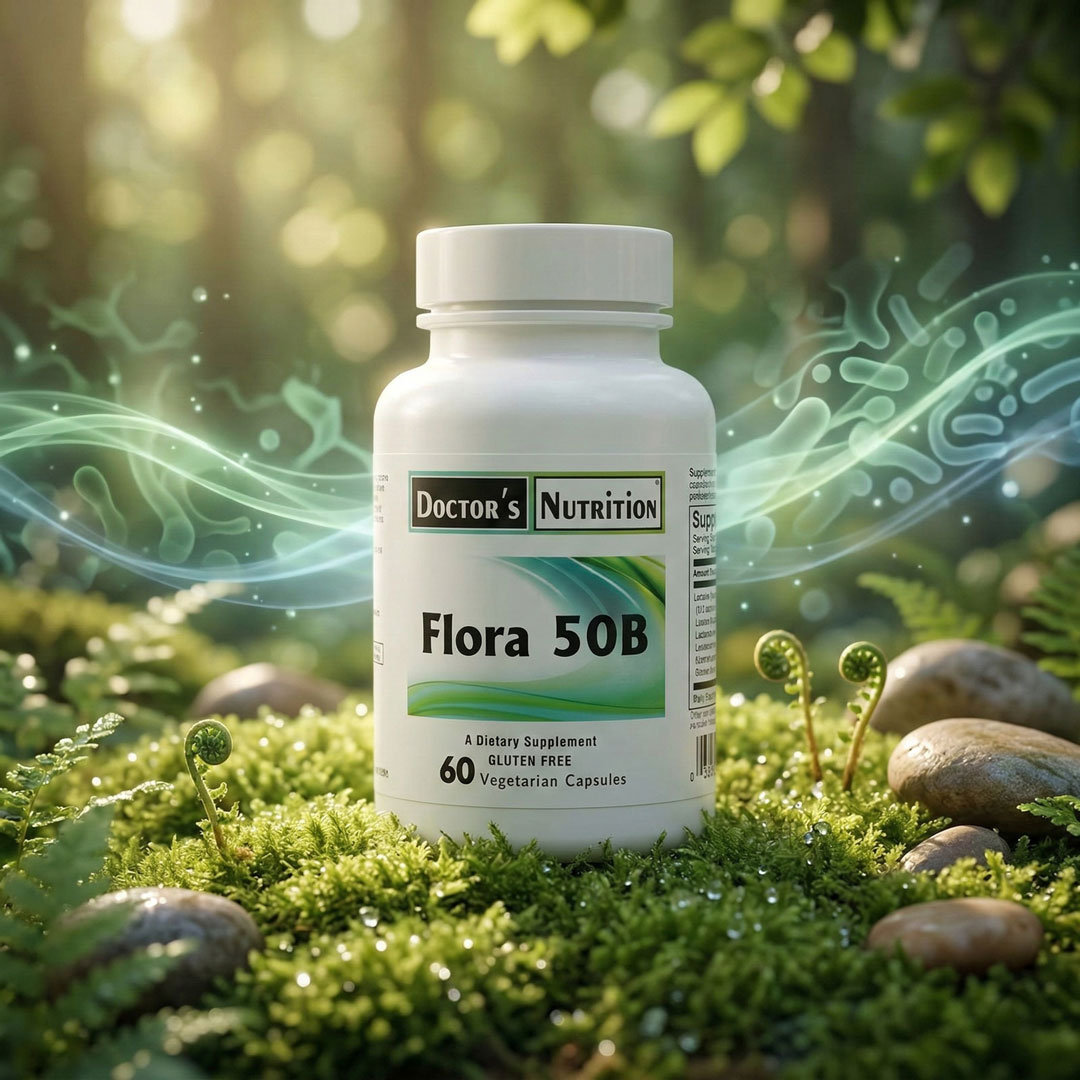
Flora 50B from Doctor’s Nutrition
Flora 50B contains nine strains of microorganisms from non-dairy sources, including four Lactobacillus strains (L. acidophilus, L. rhamnosus, L. casei, L. salivarius), three Bifidobacterium strains (B. breve, B. longum, B. bifidum), and Streptococcus thermophilus. Because each strain has an affinity for a different region of the digestive tract, the formula supports the gut as a whole rather than concentrating its effect in one location.
Flora 50B also includes Fructooligosaccharides (FOS), a soluble prebiotic fiber that selectively supports the growth of beneficial intestinal bacteria, essentially providing fuel for the probiotic strains to thrive once they arrive in the gut.*
Probiotics, Inflammation, and the Gut Lining
Your intestinal lining is one of the most important protective barriers in your body. It is designed to let nutrients through while keeping bacteria, toxins, and undigested food particles out of your bloodstream. When that lining is compromised, inflammation tends to follow, and it can show up in places that seem completely unrelated to digestion: joint discomfort, skin problems, persistent fatigue, and immune issues that keep coming back.
Probiotics support this barrier in a practical, mechanical way. Certain strains adhere to the gut wall and physically compete with harmful bacteria for space, making it harder for those bacteria to take hold. Others produce compounds that nourish the cells of the intestinal lining directly, keeping the barrier intact. A 2023 systematic review and meta-analysis published in Frontiers in Immunology found that probiotic supplementation significantly strengthened intestinal barrier function across multiple randomized controlled trials.1
A 2025 umbrella meta-analysis in the European Journal of Medical Research, covering studies through mid-2024, found consistent reductions in bloating, diarrhea, and abdominal pain with probiotic use, with the strongest results coming from multi-strain formulas.2 That finding makes clinical sense. A single strain can reinforce one section of the gut. A well-designed multi-strain product addresses the gut from end to end.
For patients dealing with symptoms that go beyond digestion, whether that is fatigue, recurring illness, or inflammatory patterns that nobody has been able to explain, the state of the gut lining is often worth investigating before looking elsewhere.
Can Probiotics Affect Your Mood? The Gut-Brain Connection
This is one of the newer areas of probiotic research, and it matters to our patient population more than most people realize. Your gut produces roughly 95 percent of your body’s serotonin. The vagus nerve creates a direct communication pathway between the intestinal microbiome and the brain. The state of your microbiome influences neurotransmitter production, stress hormone regulation, and even how your brain processes emotional information.
A 2024 systematic review and meta-analysis published in Nutrition Reviews, drawn from 13 randomized controlled trials with 786 participants, found that probiotic supplementation produced a statistically significant reduction in depression severity compared to placebo. Both single-strain and multi-strain probiotic interventions were associated with meaningful reductions in symptom scores.3
This does not mean probiotics are a treatment for clinical depression, and we would not frame it that way. What it does mean is that for patients dealing with brain fog, low motivation, and a flat mood alongside their gut symptoms, the gut-brain connection is real, measurable, and worth addressing as part of the bigger picture. We see this regularly in patients who come in frustrated that their mood issues and their digestive issues have both been evaluated separately, with neither being resolved. These two systems are more connected than most standard workups acknowledge.
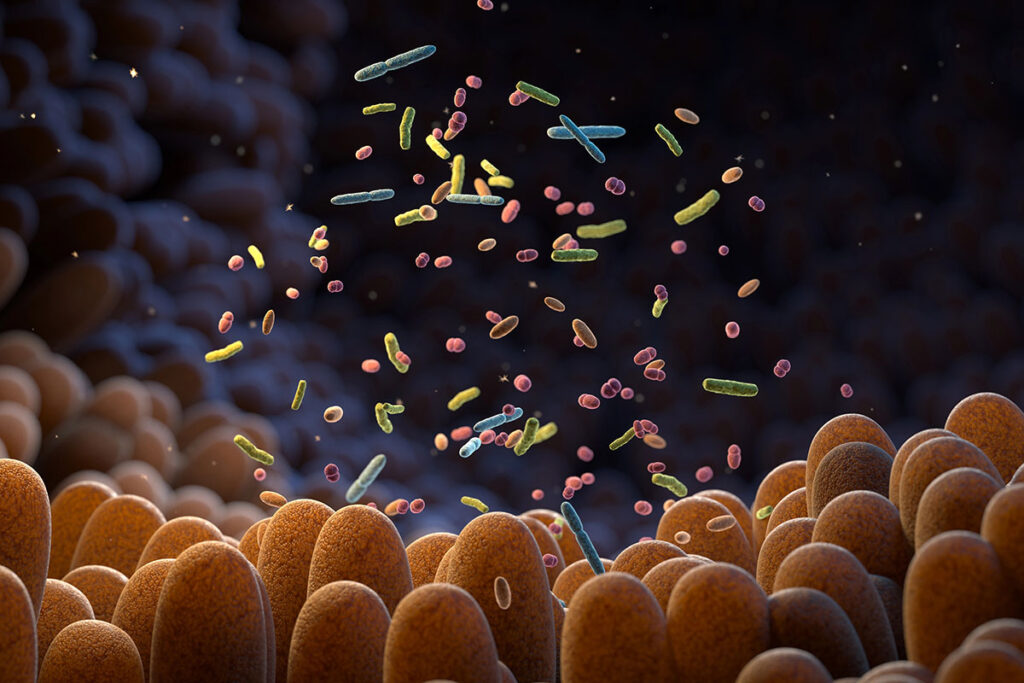
How Probiotics Influence Your Body’s Own Enzyme Production
There is a relationship between probiotics and digestive enzymes that rarely gets discussed, but it is clinically relevant.
Certain probiotic strains produce their own digestive enzymes. Lactobacillus species stimulate the production of amylase, and multiple probiotic bacteria including Lactobacillus casei produce lactase directly. This is part of why consistent probiotic use can improve dairy tolerance over time. Streptococcus thermophilus is another lactase producer, which helps explain why fermented dairy products like yogurt are often better tolerated by lactose-sensitive individuals than fresh milk, even when the lactose content is similar.
Enzymes, in turn, create better conditions for probiotic bacteria to thrive. When food is properly broken down before reaching the large intestine, there is less undigested material available to feed pathogenic bacteria. A cleaner intestinal environment supports the beneficial strains and reduces the fermentation that causes gas and bloating.
The two systems are not just complementary. They are mutually reinforcing, which is the clinical rationale for using both when lab work indicates deficiencies in both areas.
Is It Better to Take Digestive Enzymes or Probiotics?
There is no universal answer, and anyone who gives you one without knowing your specific situation is guessing.
The timing of your symptoms is one of the most useful clues. If bloating, gas, or heaviness begins within an hour of eating, that pattern points toward an upstream problem where food is not being broken down adequately before it reaches the lower gut. That is the territory of enzymes.
If your symptoms are more diffuse, appearing throughout the day and not tightly linked to individual meals, and if you have a history of antibiotic use, recurrent infections, irregular bowel habits, or immune vulnerabilities, the microbiome is more likely the primary issue. That is the territory of probiotics.
A history of multiple antibiotic courses is worth paying particular attention to. Each round depletes beneficial bacteria and can take months to recover without intentional support. We regularly see patients whose digestive and immune issues trace directly back to an antibiotic treatment years earlier that was never followed by microbiome restoration.
One clinical note worth mentioning: introducing high doses of certain probiotics to someone with Small Intestinal Bacterial Overgrowth can sometimes worsen symptoms rather than relieve them. If you have tried probiotics and felt worse, this is worth investigating before starting again. It is also one reason why supplementing without testing can create more problems than it solves.
Can You Take Digestive Enzymes and Probiotics Together?
Yes, and in many functional medicine protocols they are used as a complementary pair. Enzymes address digestion at the meal level, working immediately in the upper GI tract. Probiotics work over weeks and months to reshape the environment in the lower gut. There is no interaction risk between them, and the two systems reinforce each other in the ways described above.
A 2024 randomized controlled trial published in Frontiers in Nutrition directly measured macronutrient digestion in the small intestine following enzyme supplementation. Researchers found that a comprehensive enzyme blend significantly increased carbohydrate breakdown compared to placebo, providing direct evidence of real impact at the site of absorption.4 A 2023 randomized, placebo-controlled trial published in Biomedicine and Pharmacotherapy enrolled 120 adults with functional dyspepsia and found that a multi-enzyme blend produced meaningful improvements in quality of life and reductions in pain severity over the course of the study.5
Using both in combination, when both are indicated, is not redundant. It is addressing two different physiological systems that happen to influence each other.
Why Testing Changes Everything
You can spend years rotating through supplements and never resolve the underlying issue, because the right supplement for someone else’s gut may not be the right one for yours. The symptoms of enzyme insufficiency and the symptoms of microbiome imbalance overlap considerably, and without objective data, even an informed guess is still a guess.
At Doctor’s Nutrition, we use comprehensive blood-based functional lab panels to identify where the breakdown is actually happening. We look at markers of malabsorption and nutrient deficiencies that suggest long-standing enzyme insufficiency. We look at inflammatory signals that point to gut barrier compromise. We look at the metabolic patterns that help us understand what is driving the symptoms, not just which symptoms are present.
The results tell us whether we are dealing with an enzyme problem, a microbiome problem, or something else entirely. That specificity is the difference between a protocol that works and a supplement cabinet full of products that did not.
If you are ready to stop guessing and get a clear picture of what is actually happening in your gut, contact Doctor’s Nutrition today to schedule your free consultation.
*These statements have not been evaluated by the Food and Drug Administration. This product is not intended to diagnose, treat, cure, or prevent any disease.
References
- Zheng, Ying, Zhen Zhang, Peng Tang, Yan Wu, Ao Zhang, Danni Li, Chun-Zheng Wang, Jin-Ying Wan, Hailong Yao, and Chun-Su Yuan. “Probiotics Fortify Intestinal Barrier Function: A Systematic Review and Meta-Analysis of Randomized Trials.” Frontiers in Immunology 14 (2023): 1143548. https://doi.org/10.3389/fimmu.2023.1143548.
- Zeng, Qingfang, Pingdong Lin, Huaiyang Wu, Yunying Zhuang, Yonggang Zhang, Sanaz Asemani, Parmida Jamilian, Mehrdad Jamali, and Haixia Yu. “Probiotics and Gastrointestinal Disorders: An Umbrella Meta-Analysis of Therapeutic Efficacy.” European Journal of Medical Research 30 (2025): 515. https://doi.org/10.1186/s40001-025-02788-w.
- Asad, Afrida, Megan Kirk, Sufen Zhu, Xue Dong, and Min Gao. “Effects of Prebiotics and Probiotics on Symptoms of Depression and Anxiety in Clinically Diagnosed Samples: Systematic Review and Meta-Analysis of Randomized Controlled Trials.” Nutrition Reviews 83, no. 7 (2025): e1504–e1520. https://doi.org/10.1093/nutrit/nuae177.
- Mazhar, Shahneela, Annie Simon, Joan Colom, Ekaterina Khokhlova, Martin Buckley, Christopher Phipps, John Deaton, and Kieran Rea. “Acute Physiological Effects on Macromolecule Digestion Following Oral Ingestion of the Enzyme Blend Elevase in Individuals That Had Undergone an Ileostomy, But Were Otherwise Healthy: A Randomized, Double Blinded, Placebo-Controlled Exploratory Study.” Frontiers in Nutrition 11 (2024): 1357803. https://doi.org/10.3389/fnut.2024.1357803.
- Ullah, Hammad, Alessandro Di Minno, Roberto Piccinocchi, Daniele Giuseppe Buccato, Lorenza Francesca De Lellis, Alessandra Baldi, Hesham R. El-Seedi, Shaden A. M. Khalifa, Gaetano Piccinocchi, Xiang Xiao, Roberto Sacchi, and Maria Daglia. “Efficacy of Digestive Enzyme Supplementation in Functional Dyspepsia: A Monocentric, Randomized, Double-Blind, Placebo-Controlled Clinical Trial.” Biomedicine and Pharmacotherapy 168 (2023): 115858. https://doi.org/10.1016/j.biopha.2023.115858.
- Patricia, Justin J., and Amit S. Dhamoon. “Physiology, Digestion.” In StatPearls. Treasure Island, FL: StatPearls Publishing, 2025. PMID: 31334962.
