
Black currant seed oil is a nutrient-rich oil extracted from the seeds of the Ribes nigrum plant, commonly known as black currant. It has one of the highest concentrations of the omega-6 fatty acid gamma-linolenic acid (GLA) found in any plant source. It is also a rich source of alpha-linolenic acid (ALA), a plant-based omega-3 fatty acid precursor, and stearidonic acid (SDA), which the body converts into EPA more efficiently than ALA alone.
These fatty acids have been linked with a range of benefits for overall health and well-being. Black currant seed oil has been studied for its potential to support immune function, promote skin hydration, and help maintain hormonal balance. The black currant plant also produces dark purple berries rich in anthocyanins, which are the compounds behind much of the research on eye and vascular health discussed below. It is worth noting throughout this article that some evidence comes from black currant seed oil specifically, while other evidence comes from GLA-containing oils generally or from black currant berry anthocyanins. Those distinctions are noted where they apply.
What Is Black Currant Seed Oil?
Black currant seed oil is cold-pressed from the seeds left over after juice production from the Ribes nigrum shrub. A typical analysis shows GLA content around 12 to 15 percent of total fatty acids, ALA at roughly 14 to 15 percent, and SDA at approximately 2 to 3 percent.1
GLA is an omega-6 fatty acid, but it behaves differently from most omega-6 fats in the diet. While the typical Western diet converts most omega-6 fats into pro-inflammatory arachidonic acid, GLA takes a different metabolic route. The body uses it to produce the PGE1 series of prostaglandins, which support immune function, skin health, and a balanced inflammatory response.
SDA is particularly valuable for people who do not consume fish. The conversion of ALA to EPA in the body is inefficient in most people. SDA bypasses the rate-limiting step of that conversion, making black currant seed oil a more effective plant-based source of EPA activity than flaxseed or chia oil.1
Eight Potential Black Currant Seed Oil Benefits
1. A Concentrated Source of Beneficial Fatty Acids
What makes black currant seed oil nutritionally notable is its fatty acid profile. It provides GLA, ALA, and SDA together in a single oil. Each serves a distinct function in the body, and their combined presence makes it a more complete essential fatty acid supplement than oils delivering only one type.1
GLA is particularly difficult to obtain in meaningful amounts from a typical diet. Most dietary omega-6 fats are linoleic acid, which must first be converted to GLA by an enzyme called delta-6 desaturase. That conversion is often inefficient, especially with age, stress, diabetes, or a diet high in processed fats. Supplementing with black currant seed oil provides GLA directly, bypassing that conversion step.
2. May Support Scalp and Hair Follicle Health
Black currant seed oil contains essential fatty acids that are associated with cell membrane integrity throughout the body, including in hair follicles. Deficiency in essential fatty acids is associated with dry, fragile hair and scalp conditions that compromise the follicular environment. This relationship is established in the broader essential fatty acid literature, though direct clinical trials using black currant seed oil specifically for hair outcomes in humans are limited.
Black currant seed oil is a popular ingredient in topical scalp and hair products for its lightweight texture and fatty acid content. Oral supplementation is a more systematic route for addressing fatty acid status throughout the body, including at the level of the follicle, but this remains one of the less directly researched applications for this oil.
3. Supports Cardiovascular Wellness
The series-1 prostaglandins produced from GLA help support healthy blood flow, promote blood vessel relaxation, and help moderate the production of pro-inflammatory prostaglandins involved in platelet aggregation. These are plausible mechanistic pathways for cardiovascular support, supported by general GLA and essential fatty acid research rather than dedicated long-term cardiovascular outcomes trials for black currant seed oil specifically.
Black currant berry preparations, particularly those rich in anthocyanins, have shown effects on vascular tone and circulation in separate research. However, the berry anthocyanins and the seed oil are distinct components of the plant, and the evidence for each should not be treated as interchangeable. The cardiovascular case for black currant seed oil rests primarily on GLA’s prostaglandin-related mechanisms rather than direct endpoint studies.
Note: Black currant seed oil may theoretically affect platelet aggregation based on its fatty acid activity. This is a precautionary consideration rather than a firmly established clinical interaction. If you take anticoagulant medications or are planning surgery, discuss supplementation with your physician before use.
4. Promotes Hormonal Balance
GLA is converted in the body to dihomo-gamma-linolenic acid (DGLA), which then produces series-1 prostaglandins, particularly prostaglandin E1 (PGE1). PGE1 plays a role in hormonal regulation, and an imbalance between pro-inflammatory and anti-inflammatory prostaglandins is associated with PMS symptoms. Studies from Japan, Finland, and the United Kingdom have found that women with PMS tend to have lower blood levels of GLA and DGLA than women without PMS.3
A randomized, double-blind, placebo-controlled trial on 120 women found that supplementation with a GLA-containing essential fatty acid mixture at 1 to 2 grams daily over six months produced significant improvement in PMS symptoms compared to placebo.4 It is important to note that this trial used an EFA mixture rather than black currant seed oil specifically, so the finding supports GLA-based supplementation for PMS rather than this oil in isolation. A separate study on endometrial prostaglandin synthesis found that GLA and EPA supplementation caused significant reductions in the pro-inflammatory prostaglandins most associated with menstrual cramping and discomfort.5
These pathways are relevant to the regulation of hormones related to reproductive function and inflammatory balance. Black currant seed oil is a meaningful source of GLA and is used for this purpose, with the understanding that the direct clinical evidence applies to GLA as a compound rather than exclusively to this oil.
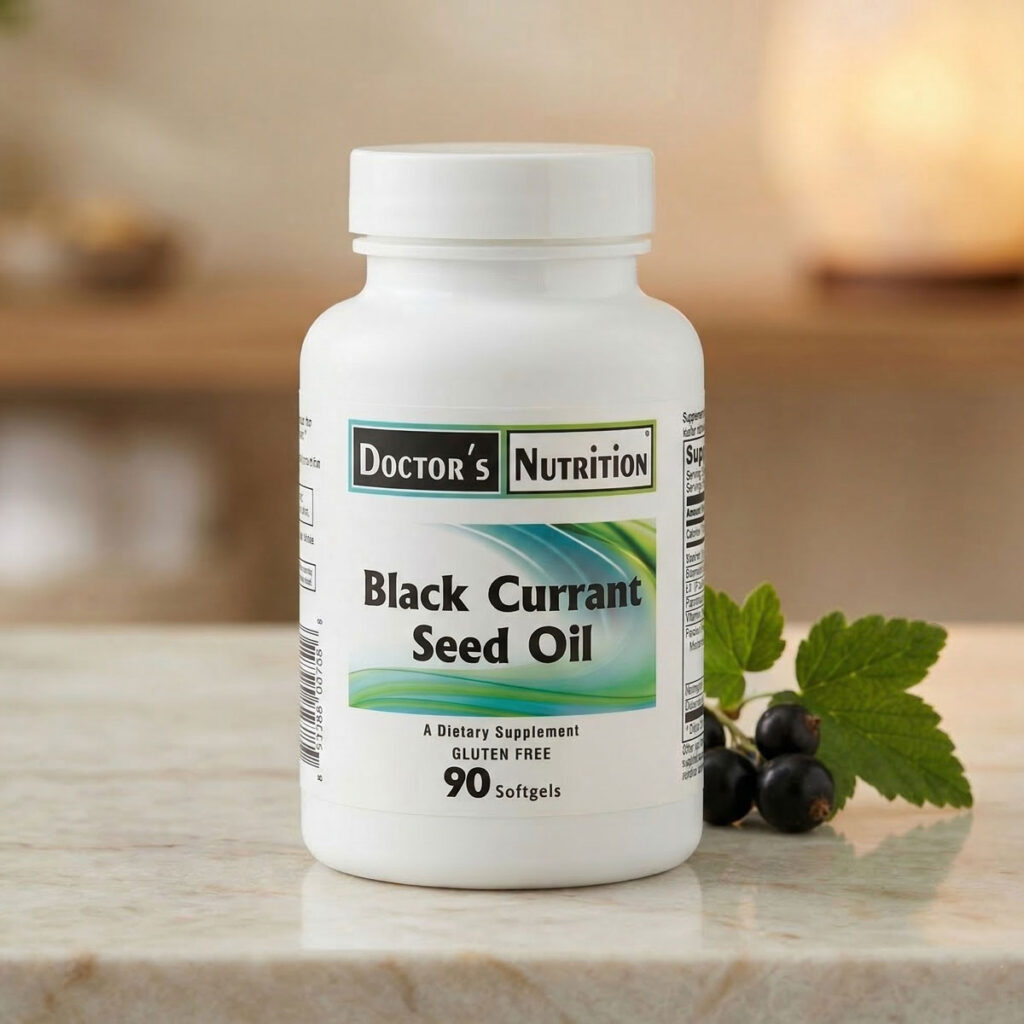
Doctor’s Nutrition Black Currant Seed Oil
90 easy-to-swallow softgels formulated with GLA to support skin health, nerve function, and premenstrual comfort
5. Supports Immune Signaling
Black currant seed oil contains naturally occurring phytonutrients and antioxidants, including compounds that interact with oxidative pathways in the body. GLA also appears to influence immune signaling through its role in prostaglandin metabolism.
A study published in Pediatric Allergy and Immunology found that black currant seed oil supplementation in nursing mothers was associated with higher IFN-gamma and lower IL-4 levels in breast milk compared to placebo.6 This cytokine profile reflects a shift in immune signaling, though the study does not support a broad claim that black currant seed oil strengthens the immune system in the everyday sense. The finding is more accurately described as an immune-modulating effect that may be relevant in specific contexts, such as maternal supplementation and atopic risk in infants.
6. Supports Skin Barrier Functions
Black currant seed oil is a rich source of GLA and ALA, two fatty acids involved in maintaining the structure and integrity of skin cells. GLA is incorporated into the lipid bilayer of the skin, where it helps regulate transepidermal water loss, the passive evaporation of moisture that leads to dryness, flaking, and a compromised barrier.
A randomized, double-blind, placebo-controlled trial published in Clinical and Experimental Allergy found that maternal supplementation with black currant seed oil during pregnancy reduced the rate of atopic dermatitis in newborns at twelve months, 33 percent in the supplemented group compared to 47.3 percent in the placebo group. This difference was not statistically significant at 24 months, so the finding reflects a shorter-term reduction in risk rather than lasting prevention.2 Separately, studies on GLA-rich supplementation generally have found improvements in skin barrier function and transepidermal water loss in adults with dry skin, though those findings are not always specific to black currant seed oil.
The beneficial properties of black currant seed oil on skin are consistent with the known role of GLA in lipid barrier support, and oral supplementation is the evidence-based route for this application.
7. Supports Eye Health
Much of the eye health research associated with black currant comes from studies on black currant anthocyanins, which are concentrated in the berry rather than the seed oil. This distinction matters when evaluating the evidence.
A double-blind, placebo-controlled crossover study found that oral intake of black currant anthocyanosides improved dark adaptation thresholds in a dose-dependent manner and reduced visual fatigue from extended screen work.7 A two-year randomized, placebo-controlled, double-masked trial on 38 patients with open-angle glaucoma found that 50 mg per day of black currant anthocyanins was associated with significantly less visual field deterioration and better retinal blood circulation compared to placebo.8 A follow-up study found that the anthocyanins also normalized serum endothelin-1 levels, a vasoconstrictor whose dysregulation contributes to glaucomatous optic neuropathy.9
Black currant seed oil and black currant anthocyanin supplements are different products derived from different parts of the plant. If eye health is the primary concern, an anthocyanin-rich black currant extract is the preparation most directly supported by the evidence cited here.
8. PMS and Menopausal Symptom Support
Because prostaglandins regulate the menstrual cycle, GLA supplementation is used by women before and during menstruation to support premenstrual comfort. GLA has been shown in clinical research on GLA-containing essential fatty acid mixtures to help with symptoms of low mood and breast tenderness associated with PMS.3, 4 Menopausal women have also reported benefit from GLA supplementation, including reduction in breast pain and mood instability, though this evidence is more preliminary.
The mechanism involves shifting prostaglandin metabolism toward the anti-inflammatory series-1 pathway. Women with PMS tend to have lower GLA conversion efficiency than women without, which is why direct supplementation with a GLA source such as black currant seed oil may be more effective than relying on dietary omega-6 fats alone.
It should be noted that the clinical trials most often cited for PMS used evening primrose oil or mixed EFA preparations as the GLA source, not black currant seed oil specifically. Black currant seed oil provides comparable GLA content and is used for the same purpose, but direct trials using this oil for PMS endpoints are limited.
Frequently Asked Questions
What is black currant seed oil good for?
Black currant seed oil is most strongly supported by evidence for skin barrier health and GLA-based hormonal and premenstrual support. It provides GLA, ALA, and SDA together, a combination that supports anti-inflammatory prostaglandin production and skin moisture retention. Eye health benefits associated with black currant come primarily from berry anthocyanins rather than the seed oil itself. It is most often used by women for PMS and menopausal symptoms, by people with dry or sensitive skin, and by anyone seeking a plant-based source of GLA that bypasses the dietary conversion step.
What does black currant seed oil do for hormones?
GLA is the active compound most relevant to hormonal balance. The body converts GLA to DGLA and then to prostaglandin E1 (PGE1), which moderates inflammatory signaling in hormone-sensitive tissues. Women with PMS tend to have lower GLA and DGLA levels, and clinical trials on GLA-containing essential fatty acid mixtures have shown improvement in PMS symptoms. The direct evidence uses EFA mixtures rather than black currant seed oil specifically, but black currant seed oil is a meaningful GLA source and is used for this purpose. The mechanism is about shifting prostaglandin balance rather than directly raising or lowering hormone levels.
Is black currant seed oil good for skin and eczema?
Yes, with evidence supporting its role in skin barrier function. GLA helps maintain the lipid barrier of the skin, which regulates moisture loss and protects against environmental irritants. A clinical trial using black currant seed oil in pregnant women found a reduction in atopic dermatitis rates in their newborns at twelve months, though this difference was not sustained at twenty-four months. Broader GLA research supports improvements in skin hydration and barrier function in adults with dry skin. For active eczema, it is best used as part of a broader management plan, and the evidence is strongest for a skin-supportive rather than curative role.
What are the benefits of black currant seed oil for hair?
GLA and ALA contribute to cell membrane integrity throughout the body, including in hair follicles, and essential fatty acid deficiency is associated with dry, brittle hair. Black currant seed oil is commonly used in topical scalp products and as an oral supplement for this purpose. Direct clinical trials specifically on black currant seed oil and hair outcomes in humans are limited, so this remains one of the less directly evidenced applications. The supporting rationale comes from the broader relationship between essential fatty acid status and follicular health.
How much black currant seed oil should I take per day?
Clinical studies on GLA-containing oils have used doses ranging from 3 to 10.5 grams per day, with 3 to 6 grams being the most common range in research on PMS and skin outcomes. The more meaningful variable is total GLA intake per serving, since GLA content varies across products. High-quality supplements specify GLA per softgel, which makes therapeutic dosing more predictable. If you have a specific health concern, a functional medicine consultation can help identify the right dose and flag any contraindications, particularly if you take medications that affect blood clotting.
What is the difference between black currant seed oil and black currant oil?
These terms are frequently used interchangeably, but they can refer to different things. Black currant seed oil is cold-pressed from the seeds and is the source of GLA, ALA, and SDA. Black currant berry extracts or concentrates are the source of anthocyanins, which are the compounds most studied for eye and vascular health. Some products combine both. When evaluating a supplement for GLA content, check that it specifies GLA per serving on the label, which confirms it is a seed oil product rather than a berry extract.
Are there any side effects or precautions?
Black currant seed oil is generally well tolerated in studies lasting up to 24 weeks. A precautionary consideration involves platelet aggregation. Based on its fatty acid activity, black currant seed oil may theoretically influence blood clotting, so caution is reasonable for people with bleeding disorders or those taking anticoagulant medications such as warfarin or aspirin, and it is advisable to discontinue use at least two weeks before scheduled surgery. This is a precautionary recommendation based on mechanism rather than a firmly established clinical interaction. Pregnant and breastfeeding women should consult a physician before use. At typical supplemental doses, no serious adverse effects have been reported in published clinical trials.
To learn more about how black currant seed oil can benefit you, get a FREE Consultation with one of our doctors (D.C.) here.
References
Yoshida, K., I. Ohguro, and H. Ohguro. “Black Currant Anthocyanins Normalized Abnormal Levels of Serum Concentrations of Endothelin-1 in Patients with Glaucoma.” Journal of Ocular Pharmacology and Therapeutics 29, no. 5 (2013): 480-487. https://doi.org/10.1089/jop.2012.0198. PMID: 23259919. Note: This study used black currant anthocyanins from the berry, not seed oil.
Vagiri, M., A. Ekholm, E. Oberg, C. Johansson, S. Andersson, and K. Rumpunen. “Enhancement of Nutritionally Significant Constituents of Black Currant Seeds by Chemical Elicitor Application.” Food Chemistry 196 (2016): 86-92. https://doi.org/10.1016/j.foodchem.2015.09.028. PMID: 26471680.
Linnamaa, P., J. Savolainen, L. Koulu, L. Tuomasjukka, R. Kallio, H. Tahvonen, and H. Arvilommi. “Blackcurrant Seed Oil for Prevention of Atopic Dermatitis in Newborns: A Randomized, Double-Blind, Placebo-Controlled Trial.” Clinical and Experimental Allergy 40, no. 8 (2010): 1247-1255. https://doi.org/10.1111/j.1365-2222.2010.03540.x. PMID: 20545710.
Horrobin, D. F. “The Role of Essential Fatty Acids and Prostaglandins in the Premenstrual Syndrome.” Journal of Reproductive Medicine 28, no. 7 (1983): 465-468. PMID: 6350579.
Rocha Filho, E. A., J. C. Lima, J. S. Pinho Neto, and U. Montarroyos. “Essential Fatty Acids for Premenstrual Syndrome and Their Effect on Prolactin and Total Cholesterol Levels: A Randomized, Double Blind, Placebo-Controlled Study.” Reproductive Health 8, no. 1 (2011): 2. https://doi.org/10.1186/1742-4755-8-2. PMC: 3033240. Note: This trial used a GLA-containing EFA mixture, not black currant seed oil specifically.
Graham, J., S. Franks, and R. C. Bonney. “In Vivo and In Vitro Effects of Gamma-Linolenic Acid and Eicosapentaenoic Acid on Prostaglandin Production and Arachidonic Acid Uptake by Human Endometrium.” Prostaglandins, Leukotrienes and Essential Fatty Acids 50, no. 6 (1994): 321-329. https://doi.org/10.1016/0952-3278(94)90241-0. PMID: 7938084.
Linnamaa, P., K. Nieminen, L. Koulu, M. Tuomasjukka, H. Tahvonen, and H. Arvilommi. “Black Currant Seed Oil Supplementation of Mothers Enhances IFN-gamma and Suppresses IL-4 Production in Breast Milk.” Pediatric Allergy and Immunology 24, no. 6 (2013): 562-566. https://doi.org/10.1111/pai.12093. PMID: 23980846.
Nakaishi, H., H. Matsumoto, S. Tominaga, and M. Hirayama. “Effects of Blackcurrant Anthocyanosides Intake on Dark Adaptation and VDT Work-Induced Transient Refractive Alteration in Healthy Humans.” Alternative Medicine Review 5, no. 6 (2000): 553-562. PMID: 11134978. Note: This study used black currant anthocyanosides from the berry, not seed oil.
Ohguro, H., I. Ohguro, M. Katai, and S. Tanaka. “Two-Year Randomized, Placebo-Controlled Study of Black Currant Anthocyanins on Visual Field in Glaucoma.” Ophthalmologica 228, no. 1 (2012): 26-35. https://doi.org/10.1159/000335961. PMID: 22377796. Note: This study used black currant anthocyanins from the berry, not seed oil.
